


Dubai infrastructure is growing fast, with new metro lines, power and water networks, airports and homes. Residents gain faster trips, steady utilities and jobs closer to home, and businesses gain more customers, a wider pool of staff and room to grow, with the first real test in 2029, when the Metro Blue Line opens.
Sheikh Mohammed bin Rashid Al Maktoum said Dubai has nearly AED2.1 trillion in infrastructure and development projects under way. They cover homes, transport, airports, power, water and business. The biggest sums go to real estate, with AED1.1 trillion up to 2030 and about 350,000 new homes. Al Maktoum International Airport gets AED128 billion. Roads and the new Metro Blue and Gold lines get AED100 billion. New power and water networks get AED151 billion.
These numbers are planned budgets, not money already spent. The real measure is the date each project opens.
Big global investors are also putting more money into the region. On 26 October, the US firm Apollo agreed to buy a minority stake in Mubadala Capital, the investment arm of Abu Dhabi’s Mubadala Investment Company. Apollo and other partners plan to put $5 billion into Mubadala Capital’s funds. Mubadala stays the main owner. This money goes into investments around the world, and none of it is set aside for Dubai’s roads or metro.
BlackRock, the world’s largest asset manager, has put a number on the whole Gulf. It expects Gulf countries to spend about $2.1 trillion on major projects between 2026 and 2030. More than 80% of this goes outside oil and gas, into areas such as transport, industry and digital services. This is BlackRock’s forecast for the region, not money BlackRock itself plans to spend.
How residents in the east gain from the new Metro
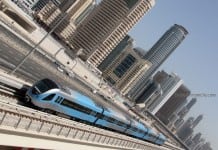
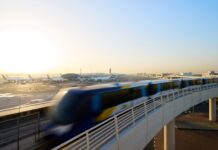
The Metro Blue Line shows who gains first. Tunnel digging started on 3 May 2026. The line costs more than AED20.5 billion. It runs 30 kilometres, has 14 stations and serves nine districts where about one million people will live. It opens in September 2029.
The line passes through areas such as Mirdif, Al Warqa, International City, Dubai Silicon Oasis, Academic City, Dubai Creek Harbour and Dubai Festival City. It connects to the Red and Green lines. If you live or work there, you can take the train instead of driving. Students at Academic City and companies in Dubai Silicon Oasis get a direct link to the rest of the city.
The Gold Line comes next. It costs AED34 billion and opens on 9 September 2032. Once both lines run, the Metro grows from 90 to 162 kilometres, close to twice its size today.
Dubai infrastructure for new homes: power, water and parks
Real estate is the biggest part of the plan, at AED1.1 trillion. Every new home needs power, water, sewage pipes and drainage. So the plan also includes AED151 billion for power and water networks, AED80 billion for large sewage tunnels and AED30 billion for the Tasreef rainwater drainage project. Another AED4 billion goes to new parks and public waterfront spaces.
For you as a resident or tenant, this spending means your new area has the services it needs when people move in. Building already moves fast. Dubai finished 104 real estate projects worth AED111 billion in the first half of 2026.
How businesses gain: aviation, finance and local trade
Other big budgets go to airports and business districts. Al Maktoum International Airport gets AED128 billion. Emirates and flydubai get AED328 billion for new aircraft. Emirates also builds a new AED18.7 billion engineering and maintenance hub. The DIFC financial district gets more than AED100 billion for its second phase, and the Dubai Exhibition Centre gets AED10 billion to grow.
These projects add room for airlines, shipping firms, banks and event organisers in Dubai South and around DIFC. Smaller businesses gain too. Shops, cafes, clinics and schools near new Metro stations can reach more customers each day. Employers in Dubai Silicon Oasis and Academic City can hire staff from across the city, since workers no longer need a car to get there. If you live in or near Dubai South, more jobs will sit close to your home.
What Dubai infrastructure means for investors
Property values respond when a project opens, not when someone announces it. The Blue Line opens in 2029 and the Gold Line in 2032. The airport and utility projects run on their own timelines. Before you buy or rent in any area, check three things: how far it sits from a confirmed new station, when the station opens, and how far along the local power and water works are.
Big investors think the same way. BlackRock expects up to $100 billion of Gulf money, which might otherwise go abroad, to stay in the region, partly in infrastructure. Deals such as Apollo and Mubadala Capital show global firms building closer ties here. For you, the question stays local: does a finished project make an area easier to reach, better for business and more in demand?
What comes next for Dubai infrastructure
Three groups gain, one after another. First come people in Mirdif, Al Warqa, International City, Dubai Silicon Oasis and Academic City, when the Blue Line opens in 2029. Next come families in new communities, as power, water and drainage keep up with about 350,000 new homes by 2030. Then come workers and companies in Dubai South and DIFC, as the airport and financial district grow.
From 2029 to 2032, the Metro grows by 80%. As this Dubai infrastructure opens, expect more tenants, buyers and businesses to look for space within walking distance of the new stations. Expect areas far from the new lines to compete harder on price. When you choose a location for your home or your company, look at its distance to a confirmed station and its opening date, not at the size of the headline number.