Geopolitical uncertainty can create new opportunities in global real estate markets
At times of geopolitical tensions, it is tempting to assume that capital retreats to perceived ‘safe havens’ and that real estate markets under the most pressure inevitably weaken.
Periods of uncertainty can prove testing for global property markets, but they can also help to refine them. These moments separate speculative demand from committed capital and, in doing so, often create some of the most compelling opportunities for well-informed buyers and investors.
Recent global instability has understandably shifted attention to risk. Yet beneath the headlines, real estate markets are not retreating so much as recalibrating. Transaction volumes may fluctuate and sentiment may soften in the short term, but the underlying dynamics remain intact. Property markets, unlike financial markets, do not move in real time; they adjust gradually, shaped by long-term fundamentals rather than immediate reaction.
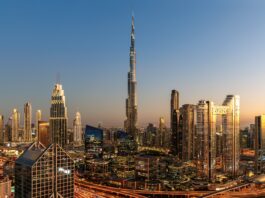
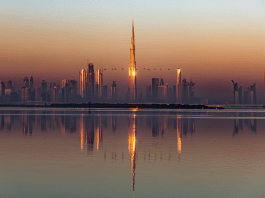
The Dubai residential sector has grown exponentially in recent years. Transaction volumes rose significantly in 2025, with more than 270,000 deals recorded and total values exceeding AED 900 billion. Even in the face of geopolitical uncertainty, demand has not disappeared. It has simply become more selective.
This is not unusual. Historically, periods of market stress can act as a filter. Short-term investors step back, while longer-term buyers — often more strategic and better capitalised — step forward.
We are already seeing that shift play out in real estate markets worldwide. Buyers are taking longer to commit, negotiating more carefully and focusing more closely on fundamentals such as location, credibility and long-term value.
The Gulf region, and particularly the UAE, has built its appeal on a different proposition to traditional markets. It is not attempting to replicate centuries of cultural attachment and heritage. Instead, it offers an alternative: connectivity, infrastructure, tax efficiency and a highly internationalised, service-led lifestyle.
For a globally mobile generation of wealth, permanence is no longer defined in the same way it once was. Buyers are not necessarily seeking a single, lifelong base. Increasingly, they are building portfolios of locations, with homes that serve different purposes at different times. In that context, the Gulf is not competing with the UK or European cities on history; it is competing on flexibility, accessibility and relevance.
When prices are rising rapidly, decision-making is often driven by momentum. Buyers follow the crowd and markets become over-inflated. In more bullish phases, this can mask underlying risk. But when there are periods of volatility, that momentum gives way to discipline. Buyers ask harder questions. Pricing becomes more realistic. The gap between best-in-class assets and the rest becomes clearer, and previously unseen opportunities emerge.
There is also a broader structural shift at play. Global wealth, driven by a new generation of buyers, is increasingly fluid, diversified and international. While some individuals will continue to favour established markets such as the UK or Switzerland, a growing proportion are actively seeking newer, faster-evolving environments.
The Gulf remains one of the few regions capable of absorbing that demand at scale.
It combines significant infrastructure investment, sustained population growth and a pro-business environment with the ability to deliver new supply quickly, something many mature markets struggle to achieve. Even amid geopolitical tension, these qualities have not disappeared. If anything, they have become more visible as buyers focus on underlying value.
Uncertainty shifts the focus away from speculation and towards long-term fundamentals. It encourages more considered decision-making and, in doing so, creates a more resilient market.
In that sense, the current situation is less a test of the Gulf’s property markets than an inflection point in their evolution.
For some buyers, the established real estate ‘safe havens’ will always represent continuity, stability and long-term planning. But for others, the Gulf represents something equally compelling: a dynamic, globally connected environment where opportunity is not diminished — but created — by global uncertainty.
Geopolitics isn’t just a risk factor anymore, it’s becoming one of the primary drivers of where, how, and why capital flows into real estate globally.
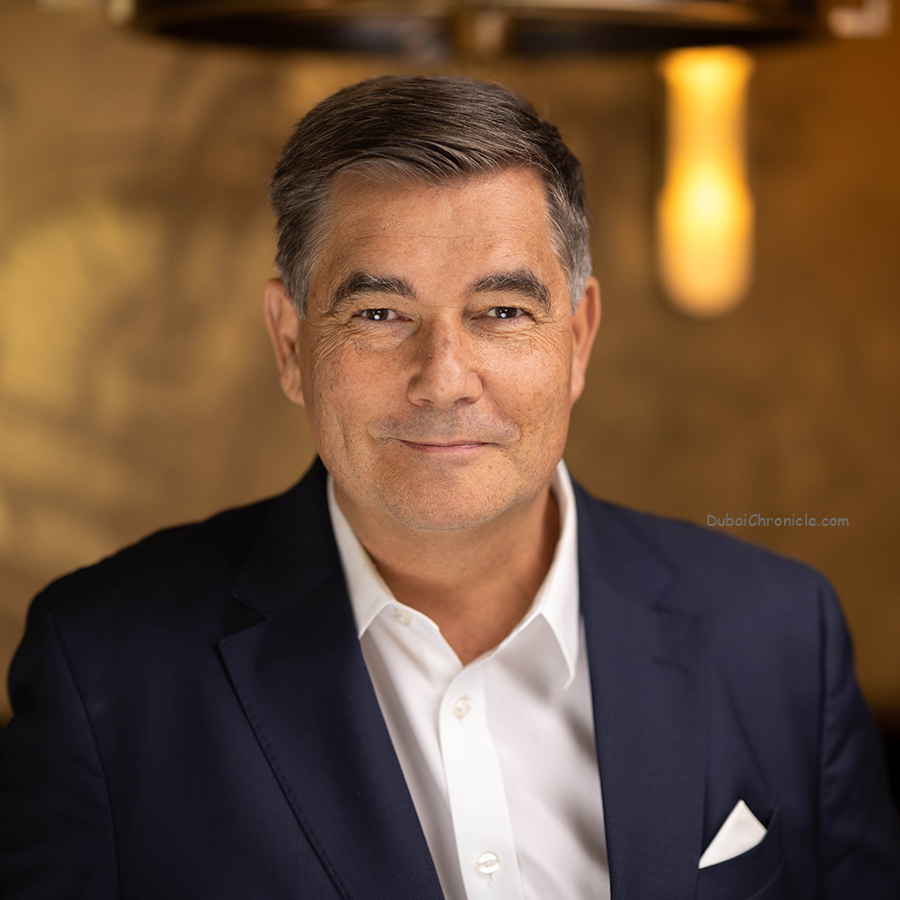
*By Chris Dietz, President, Leading Real Estate Companies of the World®