
Dubai’s property market closed the first half of 2026 with 86,005 real estate transactions worth AED 286.43 billion, spanning 71,570 units, 7,301 buildings, and 7,134 land parcels between January and June. That is a market that kept moving substantial volume and substantial value through six months that also included a natural cooling in pace after an exceptional run in late 2025. The two things sit together comfortably. Fewer deals closed month to month than during the peak of last year, but the value moving through the market held firm, which points to buyers choosing bigger, higher value homes rather than stepping back.
Within that half year total, the first quarter alone accounted for AED 252 billion across 60,303 transactions under the Land Department’s official quarterly release, up 31 percent in value and 6 percent in volume against the same period in 2025. Foreign investment reached AED 148.35 billion in the first quarter, and the investor base grew to over 48,000 people, nearly 30,000 of them buying in Dubai for the first time. That is a market still drawing new capital from around the world, not one losing interest.
What a yield tells you, and what it does not
A rental yield is simply the annual rent a property earns, shown as a percentage of what you paid for it. It helps you compare a home as an income asset rather than only as a place to live or a story to tell.
The most recent confirmed citywide yield figure on record is 7.0 percent, with apartments at 5.7 percent. That reading predates the current half year, and updated figures for 2026 have not yet been finalized by the market bodies that publish them. What is clear from the data available is that home prices grew faster than rents through the first five months of the year, with price growth easing from close to 12 percent in January to under 4 percent by May, a normal cooling after an unusually strong run rather than a change in direction.
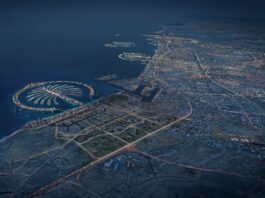
Palm Jumeirah remains the clearest example of how prestige and yield work differently. Apartments there averaged AED 3,511 per square foot in the first quarter, nearly double the citywide average, and villas averaged AED 6,428 per square foot, well above the citywide villa figure of AED 2,376. Buyers choosing Palm Jumeirah are paying for the address, the setting, and long-term scarcity, a genuine value the island has offered since it was built. It continues to build wealth over time even where the rental income on its own runs below what a mid-market apartment elsewhere in the city can offer.
Resale activity held
Home resale values in the first quarter came in almost level with the previous quarter, down just 0.4 percent, even though fewer individual sales closed. The reason is straightforward. Villa sales, which carry a higher price tag, made up a larger share of total activity, and villas kept commanding a growing premium over apartments, a gap that widened from AED 478 to AED 505 per square foot between December and March.
Buying and selling activity split fairly evenly between new developer sales and resale homes, at roughly 70 percent and 30 percent respectively, a ratio that has held steady and gives both segments of the market real depth. High value sales, homes above AED 10 million, added AED 43.7 billion in the first quarter alone, with Palm Jumeirah again leading that top tier, a sign that Dubai’s luxury segment continues to perform strongly.
Off-plan and ready homes, side by side
New developments still lead the market, making up around three quarters of residential sales value in the first quarter. That reflects genuine buyer confidence in Dubai’s growth story and in the flexible payment plans developers continue to offer, and it sits comfortably within the AED 286.43 billion in total real estate activity recorded across the full half year.
For a buyer deciding between the two, the choice comes down to what you want from the purchase. Off-plan suits someone building long-term value and comfortable waiting for a project to complete, often at a lower entry price with a payment plan spread over time. Ready homes suit someone who wants rental income starting immediately, needs mortgage financing, which banks extend far more easily on completed properties, or simply wants the certainty of seeing exactly what they are buying. Dubai’s pipeline for the rest of 2026 remains substantial, with well over 100,000 additional units on announced schedules, supporting continued choice and competitive pricing across both segments.
Across every measure in this data, the market shows a city still growing, still attracting global capital, and still offering genuine choice between income, growth, and address. The adjustment in pace this year looks like a market settling into a steadier, more sustainable rhythm after an exceptional few years, not a market losing ground.
Figures above are drawn from official Dubai Land Department releases together with REIDIN, Cavendish Maxwell, and Property Monitor market reports built on Land Department registrations. Where a specific 2026 figure, such as citywide rental yield, has not yet been finalized by these sources, this piece notes the most recent confirmed reading available rather than estimating ahead of the official data.