There is a category of decision that only makes sense if you believe the future looks different from the present. Not marginally different. Structurally different. The decisions being made in Dubai right now, by institutions with long time horizons and significant capital at stake, belong to that category.
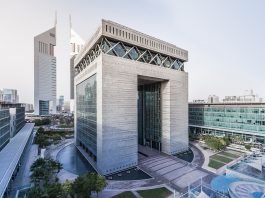
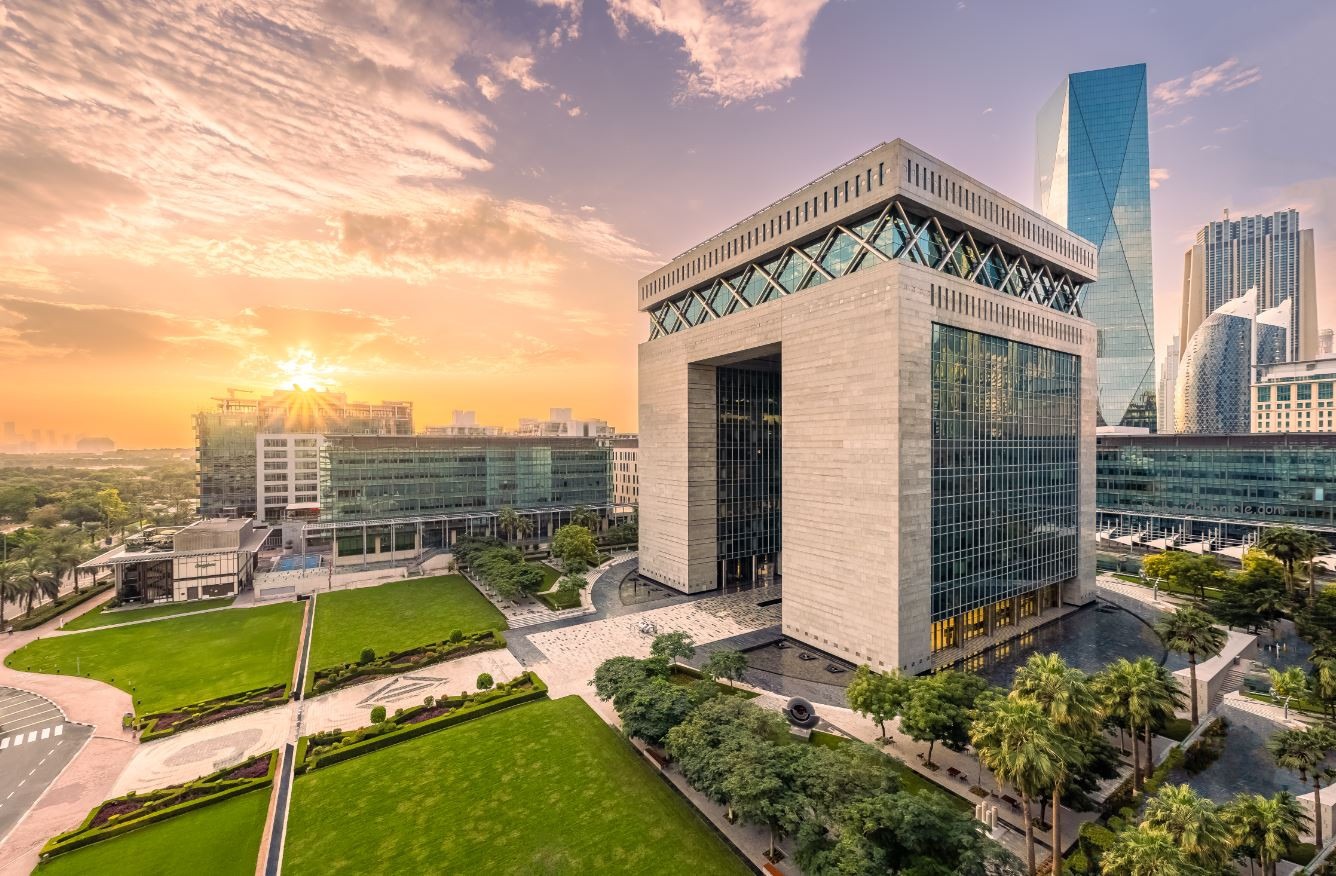
In March 2026, real estate transactions in Dubai fell nearly 30 percent month on month following a regional escalation that sent Gulf equity markets into a sharp correction. The UAE closed its exchanges for two trading days. Activity pulled back. And while activity was pulling back, DIFC completed DIFC Square ahead of schedule, fully pre-leased, with Deutsche Bank, Moody’s, Bank of Singapore and TP ICAP among the tenants already fitting out their offices. That sequence is the story.
DIFC Square delivered 600,000 square feet of Grade A office space into a district where vacancy rates had already fallen below 5 percent. Every square foot was committed before the building was finished. The firms moving in are not startups or regional offshoots. They are institutions expanding or relocating their principal operations, which means they have assessed Dubai not as a market to watch but as a market to be present in, at scale, for the long term.
The reason that calculation keeps producing the same answer is structural. BCG’s GCC Asset Management Report, released this month, confirms that assets under management across the region reached $2.7 trillion in 2025, a 10 percent increase in a single year and one of the strongest annual performances in over a decade. The retail segment grew 14 percent. Institutional assets grew 9 percent. The firms BCG describes as best positioned to capture this growth are those investing now in distribution capabilities, technology infrastructure, and scalable operating models. Those firms need a physical address, and in the GCC, the address that institutional capital selects at this level is DIFC.
Which is why the district is not stopping at DIFC Square. The planned Zabeel District expansion will add 17.7 million square feet of commercial space across six phases, with completion extending to 2040. The committed investment is $27 billion. That figure is not a response to today’s market. It is a response to the market BCG projects when tokenized real-world assets, currently a fraction of institutional portfolios, reach $14 trillion by 2030 and $55 trillion by 2035. The physical infrastructure of DIFC is being built for a version of regional finance that does not fully exist yet.
The hotel sector is making the same calculation from a different position.
Burj Al Arab is undergoing its first major restoration since it opened in 1999. Armani Hotel Dubai went dark in the first quarter of 2026. St. Regis Dubai The Palm took its room inventory offline through August. Radisson Blu Dubai Media City closed in April for renovation and will exit the Radisson brand entirely from 2027. These are not distressed properties cutting costs. These are tier-one operators, with full awareness of regional conditions, choosing to absorb revenue loss now in order to present a repositioned asset when the market normalises.
The visitor they are renovating for is not the leisure tourist who books eighteen months in advance. It is the principal, the fund manager, the institutional relationship manager arriving in a region that BCG confirms is managing capital at a scale and growth rate that demands their physical presence. A region generating $2.7 trillion in assets under management, expanding at 10 percent annually, produces a specific hospitality requirement: properties that match the standard of the capital being deployed. The refurbishment wave is, in the plainest terms, a bet on the same inflection point that DIFC is betting on from the office side.
The infrastructure layer ties both bets together. The Blue Line metro extension will connect Business Bay and the canal corridor to districts currently accessible only by road. The Roads and Transport Authority water taxi network now links Business Bay stations directly to Dubai Marina. Expo City is drawing sustainability-focused corporate occupiers. Dubai Creek Harbour’s next-generation development is attracting office-retail hybrid operators. Each of these moves reduces friction at the margins of the prime districts, extending the geographic logic of institutional commitment beyond DIFC and Downtown.
What makes 2026 the right moment to be reading these signals is precisely that sentiment and fundamentals have separated. Transaction volumes pulled back in March. They recovered through April and May. Q1 2026 closed at Dhs252 billion in total property transaction value, 31 percent above the same period in 2025, according to the Dubai Land Department. The market held under pressure, paused, then continued along the trajectory it was already on.
The institutions building inside DIFC and the operators refurbishing along the waterfront made their decisions before that recovery happened, which is what distinguishes a structural position from a reactive one.
Dubai in 2028 will have more Grade A office space, a refurbished luxury hospitality layer, extended metro connectivity, and a regional asset management industry that BCG projects will continue growing at a pace that outperforms most comparable markets globally. The firms and operators investing now are not predicting that future.