













Dubai’s real estate market is entering a new and more balanced phase. After three years of strong price growth, high transaction volumes, and active speculation, the outlook for 2026 is becoming clearer. Based on Sterling Capital Real Estate’s on-the-ground experience and ongoing market observations, the market is not heading for a downturn, but rather a period of normalization.
Prices are cooling in areas where supply and speculation have been most intense. At the same time, established and high-quality locations continue to show resilience, supported by end-user demand and long-term investors.
For buyers and investors, this shift is important. The market is moving away from fast, speculative gains and toward a more thoughtful approach focused on income, location quality, and long-term value. In many ways, 2026 represents both a reset and an opportunity.
Why Dubai Still Attracts Global Buyers
Dubai continues to benefit from strong fundamentals. A tax-friendly environment, business-focused regulation, long-term residency options, and foreign ownership rights make the city attractive to international investors. Population growth remains steady, driven by professionals, entrepreneurs, and high-net-worth individuals looking for stability and lifestyle quality.
What has changed is the speed of growth. Capital inflows have slowed from the rapid pace seen between 2022 and 2024. According to Sterling Capital Real Estate’s observations, buyers are becoming more selective, paying closer attention to rental demand, infrastructure, and long-term resale potential. The market is shifting from momentum-driven decisions to value-based ones.
Price Trends: Adjustments, Not a Collapse
Looking ahead to 2026, moderate price corrections are expected in some residential segments, particularly in apartment-heavy areas with a large number of new off-plan launches. This is mainly due to increased supply rather than a drop in demand.
Prime and ultra-prime properties, however, are expected to remain relatively stable. Limited land availability, a high number of cash buyers, and continued interest from global wealth are helping to support prices. Luxury villas, waterfront homes, and branded residences are no longer rising at the pace seen in previous years, but they are largely holding their value.
The key point is that Dubai is no longer behaving as a single market. Performance now depends heavily on location, property type, and buyer profile.
Supply Growth and Uneven Absorption
One of the main features of the 2025–2026 period is a large wave of new residential completions, the biggest in over a decade. Most of this supply is concentrated in newer or peripheral areas, particularly mid-market apartment communities.
While more supply increases choice, absorption is uneven. Areas without strong rental demand, transport links, or established infrastructure are more exposed to price pressure. In contrast, mature communities with proven demand and limited future supply remain more protected.
This makes location analysis more important than ever.
How Investors Are Changing Their Approach
Sterling Capital Real Estate is seeing a clear shift in investor behavior. Institutional and high-net-worth buyers are moving away from short-term speculation and toward income-producing assets in well-established areas.
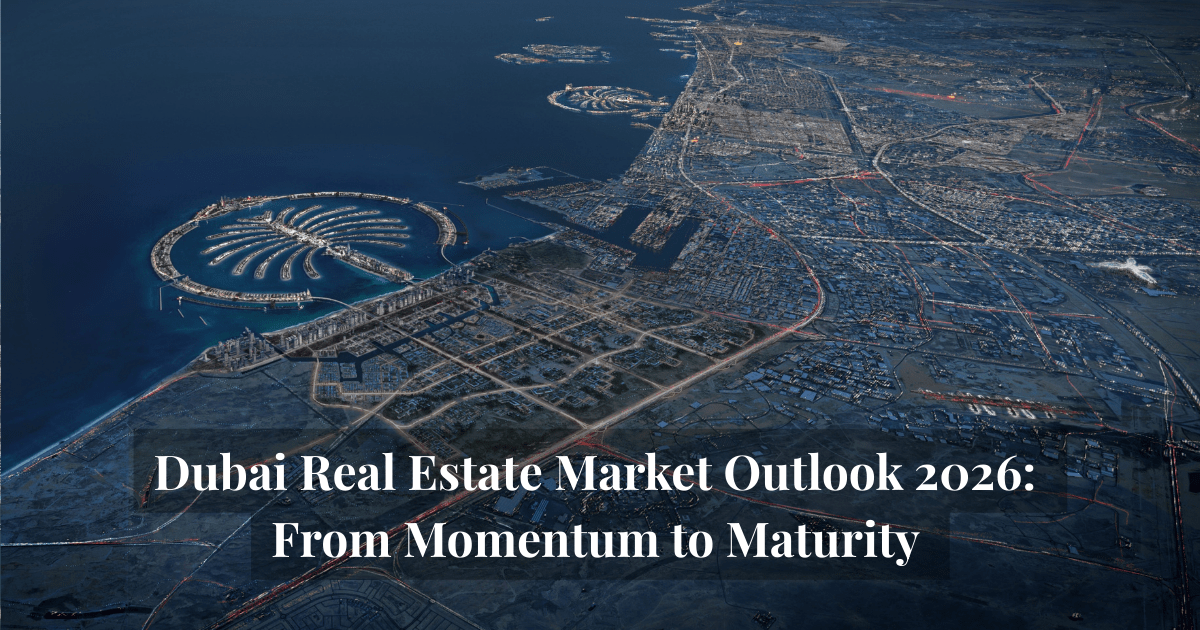
Demand remains strong in locations such as Palm Jumeirah, Emirates Hills, and Downtown Dubai. These areas benefit from limited supply, strong branding, and deep resale markets. Buyers here are focused less on short-term price movement and more on capital preservation, rental income, and lifestyle value.
As a result, the market is increasingly split into three parts: stability at the top end, adjustment in the mid-market, and higher risk in less established areas.
What This Means for Investors in 2026
The market in 2026 rewards discipline. Buyers who focus on strong locations, sustainable rental demand, and long-term liquidity are better positioned than those chasing quick gains.
Rental yield is becoming more important as price growth slows. Well-located apartments and family-oriented villa communities with strong leasing histories are likely to perform better.
Importantly, periods of adjustment often create good entry points. For long-term investors, 2026 may offer opportunities to acquire quality assets at more realistic prices compared to the peak of the previous cycle.
A More Mature Market
Dubai’s real estate market in 2026 reflects growing maturity. Excesses are being corrected, not wiped out. Capital is becoming more selective, and value is concentrating in properties with real fundamentals.
From Sterling Capital Real Estate’s perspective, this transition is a positive sign. Markets that normalize tend to be more stable, more transparent, and more sustainable over time. Rather than ending a growth story, Dubai real estate is entering a more balanced chapter where quality, income, and resilience matter more than speed.