Abu Dhabi’s Growing Falcon Auction Market
A rare white falcon set the top price at this year’s Abu Dhabi International Hunting and Equestrian Exhibition, and the sale opens a wider question about what gives an animal a multimillion dirham value.
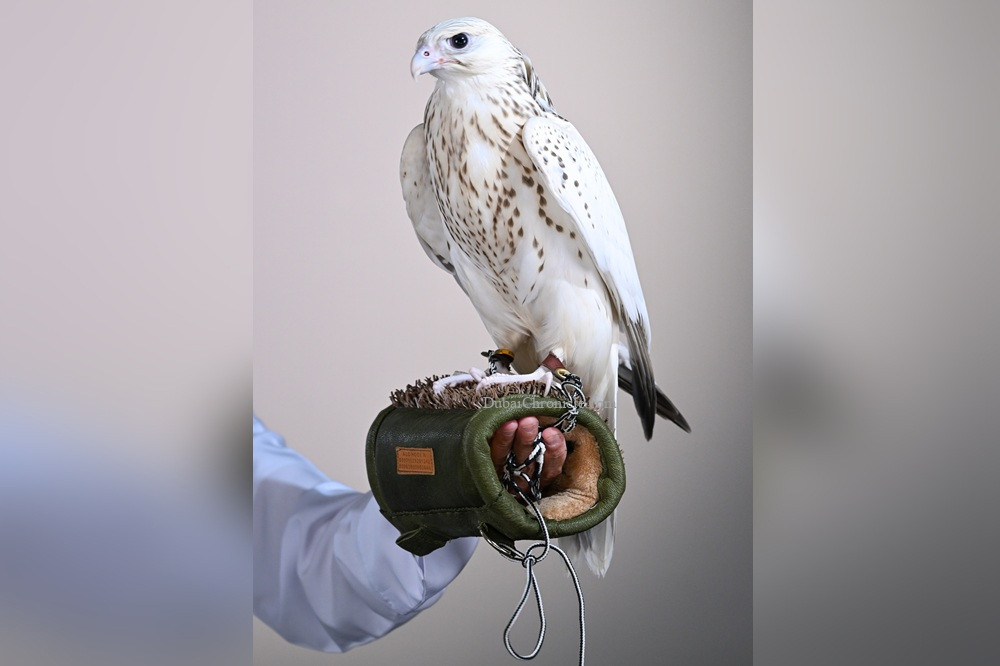
The Qarmousha Pure Ultra White falcon sold for AED 1.5 million, close to USD 408,000, during the fifth auction of ADIHEX 2026 at ADNEC Centre Abu Dhabi. The bird belongs to Mark Moglich Falcon Farm in the United States, weighs one kilogram, and measures 16.5 inches in length and width. Its pure white coloring, physical proportions, and breeding potential drew strong interest from leading falconers on the floor.
The result marks the highest price achieved across this year’s ADIHEX auctions, though it falls short of the global record. A white American gyrfalcon sold for SAR 1.75 million, roughly AED 1.71 million or USD 467,000, at a Saudi auction in 2021, and that sale still holds the documented worldwide high for a falcon.
This year’s programme is the largest in ADIHEX history, held under the patronage of Sheikh Hamdan bin Zayed Al Nahyan, Ruler’s Representative in the Al Dhafra Region and chairman of the Emirates Falconers’ Club. The exhibition brings together 55 local and international falcon breeding and care farms, a 20 percent rise in participation from 2025, with nine farms attending for the first time. ADNEC Group organizes the event in partnership with the Emirates Falconers’ Club, and it runs at ADNEC Centre Abu Dhabi until 6 September.
Set against other specialist animal markets, the falcon’s price looks measured rather than extraordinary. The Green Monkey, a thoroughbred colt, sold for USD 16 million, about AED 58.8 million, at the 2006 Fasig Tipton sale on the strength of pre debut speed trials, then earned only USD 10,440 in prize money across a racing career with no wins, a case study in how an auction price and a subsequent outcome can diverge sharply. The Nelore cow Carina FIV do Kado sold in Brazil in November 2024 for BRL 24.06 million, close to USD 4.1 million, a figure Guinness World Records recognizes as the highest auction price paid for a cow, driven by the commercial value of her embryos and offspring across multiple owners. The Belgian racing pigeon New Kim reached EUR 1.6 million in 2020, priced almost entirely on the value of reproducing her bloodline rather than any future competition earnings. Double Diamond, a Texel ram, sold for GBP 367,500 in Scotland in 2020, purchased jointly by three breeders who split the cost and share breeding and artificial insemination income. Reports place a Tibetan mastiff sale near USD 1.9 million, about AED 7 million, tied to rarity and status rather than a documented commercial return.
Two distinct components typically make up the price of an exceptional animal. Tangible value covers what an owner can reasonably project in breeding fees, embryos, offspring sales, race winnings, competition prizes, and eventual resale, built from genetics, health, age, fertility, and documented performance. The second component is harder to price. Rarity, exclusivity, ownership prestige, and the cultural weight attached to winning a closely watched auction carry their own premium, one that depends on another buyer later attaching the same importance to the same provenance or appearance.
That premium is not necessarily money spent without return. A record setting sale draws attention to a breeding farm, strengthens its standing, and lifts demand for related bloodlines, and the publicity a major auction generates can carry real marketing weight of its own. What makes this portion of the price harder to defend is that it rests on continued belief rather than a fixed asset. For the Qarmousha Pure Ultra White falcon, part of the AED 1.5 million reflects genetics, physical condition, and breeding potential. The remainder reflects the scarcity of its coloring, the competition among bidders in the room, and the standing of falconry within Gulf culture.
An auction price fixes fair value for a single moment, not for the life of the animal. Health, fertility, and performance can shift after the sale, and a bloodline that looks exceptional today can lose or gain standing based on what its offspring produce. A buyer at this level purchases biological potential, heritage, and social distinction together, and only the first of those three carries a clear path to measurable income. The Qarmousha result sits at that intersection exactly. It prices a rare bird, and it also prices access to heritage, prestige, and one of the Gulf’s most closely followed collecting markets.