








Etihad Rail Dubai Station: What the Train Actually Buys
Today, Etihad Rail begins carrying passengers for the first time, on a network that has operated freight services since 2016, beginning with the Shah-Habshan-Ruwais route. The introductory route runs Abu Dhabi to Fujairah, one hour and 45 minutes, with Comfort Class fares starting at AED 55 and Premium at AED 120. The Dubai station does not open until 30 September, and when it does, it lands inside Jumeirah Golf Estates, the same community that already carries one of Dubai’s Red Line metro stops and now sits on the Gold Line corridor as well.
That stacking is the story for anyone reading this as a property decision rather than a transport announcement.
Jumeirah Golf Estates is not an emerging district being discovered by infrastructure. It is an established one, 1,100 hectares around two Greg Norman championship courses, fully built out since 2013, where villas sit firmly within Dubai’s upper price band, broadly in the AED 8 million to AED 40 million luxury range that also covers Dubai Hills Estate, Palm Jumeirah and Emirates Hills. Portal-level listing data places per square foot pricing in the area well above Dubai’s citywide villa average of roughly AED 1,594, and rental yields across multiple independent sources cluster in a 6 to 8 percent band, broadly in line with other established villa communities rather than at the top of the market. This is not a district where a national rail station creates value out of nothing. It is a district where a third major transit layer, Red Line metro, the planned Gold Line, and now Etihad Rail, gets added on top of an address that was already commanding a premium.
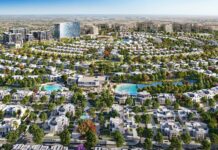
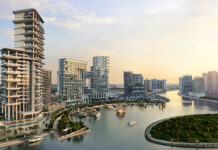
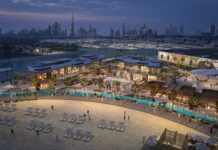
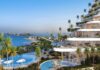
What makes the Dubai station specific rather than general is who actually controls the land beneath it. The Etihad Rail terminal sits inside Wasl’s The Next Chapter, a 4.68 million square metre expansion of Jumeirah Golf Estates currently underway. The scale is substantial: 12,345 new residential units across six districts, including 780 villas, 62 ultra-luxury hilltop mansions, 97 branded residences, 752 estate homes and 10,654 apartments, built to house more than 51,700 residents. The masterplan adds a 5,000-seat tennis stadium, a dedicated equestrian village, a Mandarin Oriental hotel, and 48,000 square metres of retail and dining space, all aligned with the Dubai 2040 Urban Master Plan. This is the one development in the city that can genuinely market direct access to the rail terminal rather than proximity to it, because the terminal is being built on land Wasl controls.
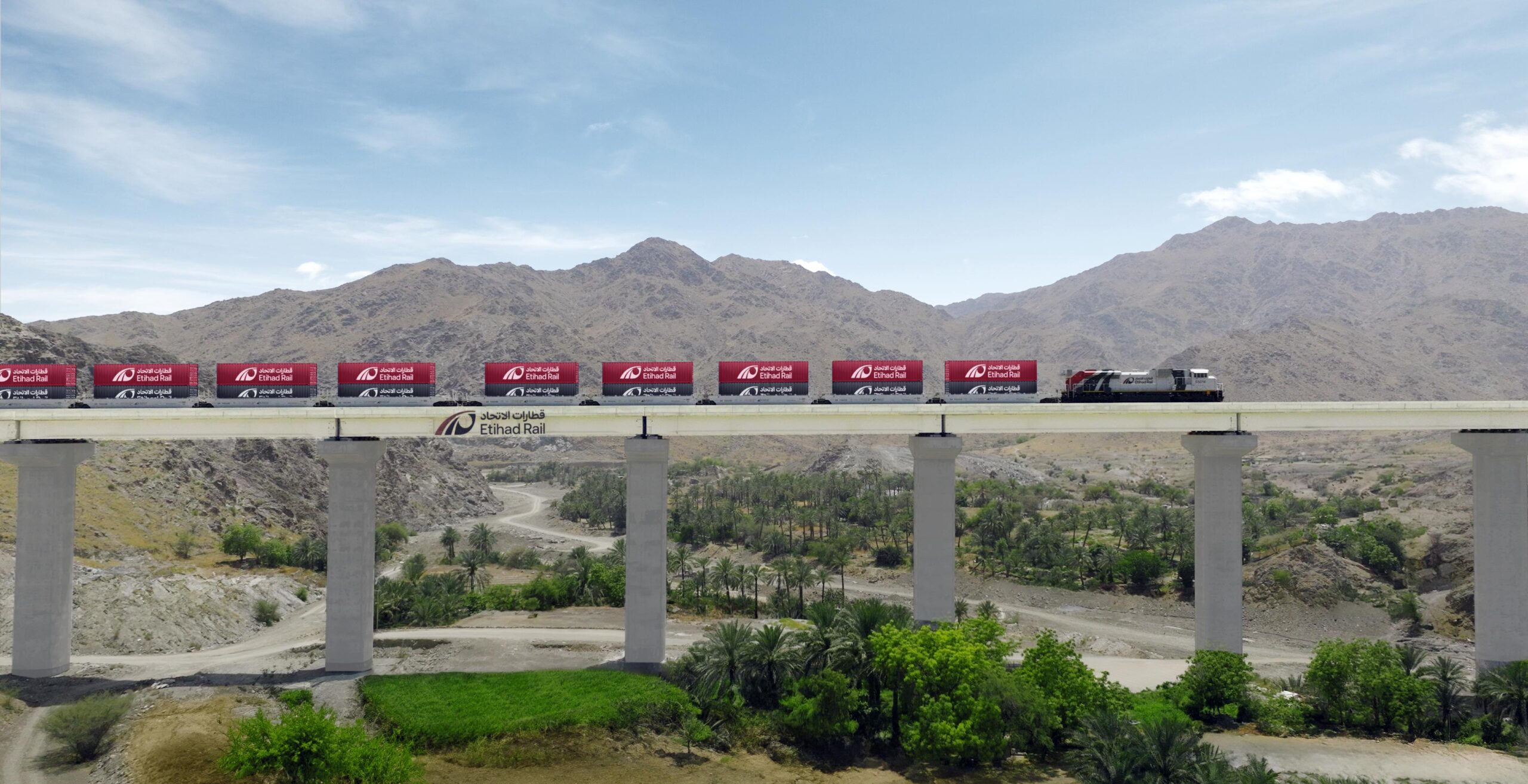
The route itself runs from Abu Dhabi’s Mohamed bin Zayed City through open desert corridor before reaching the cultivated greenery of the Jumeirah Golf Estates terminus, a contrast in landscape that mirrors the contrast in property type the journey connects. Etihad Rail’s own brand identity, redesigned in 2024 around a logo merging a falcon’s eye with the train silhouette and the rail track itself, was conceived to signal precision and a long-term, deliberate trajectory rather than a fast-moving speculative venture, which is a reasonable way to characterise the company’s approach to network expansion generally.
That distinction matters for how a buyer should read the announcement. In a district reaching transit access for the first time, a new station changes the fundamental accessibility proposition and the price response reflects genuine repricing of utility. In Jumeirah Golf Estates, the Etihad Rail station is closer to a confirmation of status than a transformation of it. Wasl’s marketing for The Next Chapter already leans on this distinction explicitly, positioning the rail terminal as an amenity for a buyer who has decided golf-front, gated living is the product, not as the reason to consider the area in the first place.
The buyer this suits is specific. Someone purchasing in Jumeirah Golf Estates is not optimising for commute time to DIFC or Business Bay, despite both now being more reachable than before. They are buying into golf-course frontage, architectural consistency, and a community that has hosted the DP World Tour Championship since 2008. The rail and metro layers protect resale value and widen the buyer pool over time, but they are not the reason a family chooses to live there.
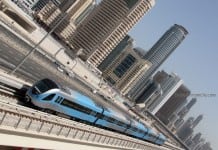
The wider corridor benefits more indirectly. Communities served by the existing Jumeirah Golf Estates Metro Station, which now functions as the effective access point for the rail terminal too, include Green Community, Dubai Investment Park, Dubai Production City and Expo City Dubai. Al Furjan sits in this same catchment at a meaningfully lower price point than Jumeirah Golf Estates itself, which is the more interesting entry for a buyer optimising for connectivity over address prestige. None of these communities sit on the land the terminal occupies. They sit within reach of it, which is a different and more modest proposition than what Wasl is selling inside The Next Chapter.
The station also sits roughly 30 minutes from Al Maktoum International Airport, the site being developed as Dubai’s primary long-term aviation hub. That proximity is a second structural reason this corridor is positioned for growth independent of the rail launch itself. There is also a climate dimension to the shift toward rail freight and passenger movement that buyers weighing long-term value should note in passing, since Etihad Rail’s broader operations are positioned to reduce road transport emissions as a matter of national climate policy, which is a factor increasingly reflected in how institutional capital prices infrastructure-adjacent real estate.
What today’s launch does not yet do is change pricing in any Dubai district, because the Dubai station will not open for three months. What it does is set a clock. Dubai’s metro announcements have historically produced measurable price moves in their corridor districts within months of being announced, well ahead of completion. Etihad Rail’s Dubai opening on 30 September is the next date on that calendar, and the masterplan that controls the terminal land is the one positioned to capture the earliest and most direct pricing response once the station goes live.
The decision in front of a buyer today is not whether to act on Etihad Rail. It is whether the property they are evaluating sits on the land the infrastructure is built into, sits within its catchment, or sits near it by association. Those are three different investments wearing the same headline.