









Wealth Creation in Dubai: What the World’s First Trillionaire Signals for Investors
When SpaceX completed its Nasdaq listing on June 12, 2026, it did not just set a record. The company priced 555.6 million shares at $135 each, raised $75 billion, and debuted at a valuation of $1.77 trillion, making it the largest IPO in history. In doing so, it pushed Elon Musk past a threshold no individual had reached before. At approximately $1.1 trillion, his estimated net worth makes him the world’s first trillionaire, a fortune that exceeds the combined wealth of the next four richest people on earth: Larry Page, Sergey Brin, Jeff Bezos, and Larry Ellison.
For investors based in Dubai, the milestone is not a curiosity. It is a signal about where wealth creation is heading and which industries will drive it.
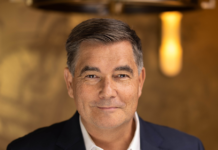
Nigel Green, chief executive of the deVere Group, a global financial advisory firm, argues that the headline number matters less than the structural forces behind it. “The emergence of the world’s first trillionaire tells us something important about where value is likely to be created in the future,” he said. “Investors who understand those trends early are likely to be best positioned for the opportunities ahead.”
Those trends include artificial intelligence, automation, advanced communications, robotics, digital infrastructure, energy innovation, and commercial space activity. They are not speculative. They already attract institutional capital at scale, and Dubai-based institutions have moved early.
MGX, the UAE’s advanced technology investor founded by G42 and backed by sovereign capital, participated in xAI’s $20 billion Series E round in January 2026. Following xAI’s merger with SpaceX in February, that position now gives MGX exposure to the combined entity’s space transportation, satellite communications, and AI infrastructure capabilities. The fund also holds stakes in OpenAI and Anthropic, placing it across the dominant AI model builders of the current generation.
Abu Dhabi-listed International Holding Company and Alpha Dhabi Holding each invested $25 million in SpaceX in June 2022, when the company carried a fraction of its current valuation. The Qatar Investment Authority joined MGX as a participant in xAI’s Series E round, alongside Nvidia and Cisco, in a raise that exceeded its $15 billion target. Anna Hazlett, founder and chief executive of UAE investment and advisory company AzurX, described the regional logic clearly: Gulf institutions want access to cloud infrastructure, space communications, and orbital data centres, and SpaceX gives them all three.
The wealth creation opportunity that produced the world’s first trillionaire did not emerge overnight. It was built on companies that reached global markets instantly, built ecosystems essential to consumers and businesses, and generated value at a pace that accelerated with each year. Green puts it directly. “The world’s most successful companies are operating on a scale that would have been difficult to imagine only a generation ago. They can reach global markets instantly and create value at a speed that continues to accelerate.”
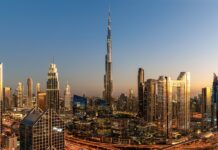
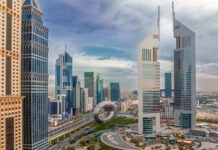
Dubai’s position to participate in the next phase of that wealth creation is structural, not incidental. As of late 2025, Dubai Internet City is home to 4,000 businesses, including multinationals and Fortune 500 companies, alongside more than 31,000 tech professionals. The district accounts for 65 percent of the emirate’s technology GDP. Tecom Group committed an additional Dh615 million to Phase 4 of its Innovation Hub to meet demand from global technology companies, bringing total investment in the project to Dh2 billion.
That infrastructure, combined with the institutional capital relationships UAE funds have built with the world’s most consequential technology companies, creates a foundation for investors based here to access the industries driving the next generation of wealth creation.
The forward outlook is specific. SpaceX’s IPO filing identified orbital AI compute deployment, Starlink Mobile expansion, and consumer AI monetisation as its primary growth vectors. Starlink, the company’s only profitable segment, generated $11.4 billion in revenue in 2025, accounting for 61 percent of total company sales. SpaceX estimates its total addressable market across space, connectivity, and AI at $28.5 trillion. The companies best placed to capture portions of that market represent the wealth creation opportunities of the next decade.
Green identifies the pattern directly. “Markets are increasingly directing capital towards companies that build critical infrastructure, create new capabilities and open entirely new areas of economic activity. Investors are searching for businesses that can deliver growth over the next decade, not the next quarter.”
The arrival of the world’s first trillionaire, he argues, is not a one-off event. It marks the opening of a new era in which the technologies reshaping the global economy have the potential to create additional trillion-dollar fortunes. For Dubai-based investors, the question is not whether these opportunities exist. The region’s sovereign funds have already confirmed they do, with capital committed well ahead of the SpaceX listing. The question is how quickly individual and institutional investors in the market act on the same intelligence.
“Many people will focus on Elon Musk,” Green says. “Investors should focus on what comes next. The lesson is not about one individual. It is about understanding the themes that are reshaping the world economy and identifying the businesses that stand to benefit from them. This milestone offers a glimpse into the future of wealth creation.”