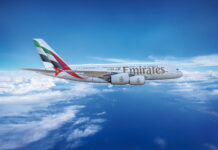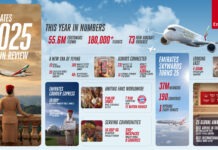












Emirates Terminal 3 at Dubai International Airport now offers one of the most complete premium transit experiences in the world. That claim is not marketing. It is the result of years of capital investment that compounded quietly and became visible all at once in the 2025-26 financial year, when Emirates reported the best profit result in its history and in the global airline industry.
If you are flying through Dubai this year, here is what has changed on the ground and in the air, and why it matters before you book.
The Emirates First Lounge at Terminal 3
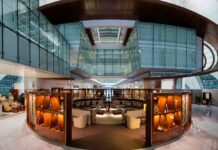
Emirates opened Emirates First in 2025, a dedicated check-in lounge inside Terminal 3 reserved exclusively for First Class passengers and Skywards Platinum members. It is not an upgrade to an existing space. It is a standalone facility designed to separate the entry experience entirely from the general check-in floor.
For Platinum members and First Class travellers, the process of arriving at the airport now begins in a controlled, quiet environment rather than a shared terminal. That distinction is small on paper and significant in practice, particularly on long-haul connections through a hub that handles tens of millions of passengers annually.

Connectivity From the Lounge to the Aircraft
In November 2025, Emirates announced a deal with Starlink to equip its fleet with high-speed Wi-Fi. By 31 March 2026, 21 aircraft were already fitted and active. The rollout continues across the remainder of the fleet.
The practical result is that the connectivity standard available in a premium lounge, fast, reliable, streaming-capable, is now available at altitude on a growing number of Emirates routes. For business travellers, the distinction between working in the lounge and working onboard is narrowing.
Chauffeur Drive Expanded to New Cities
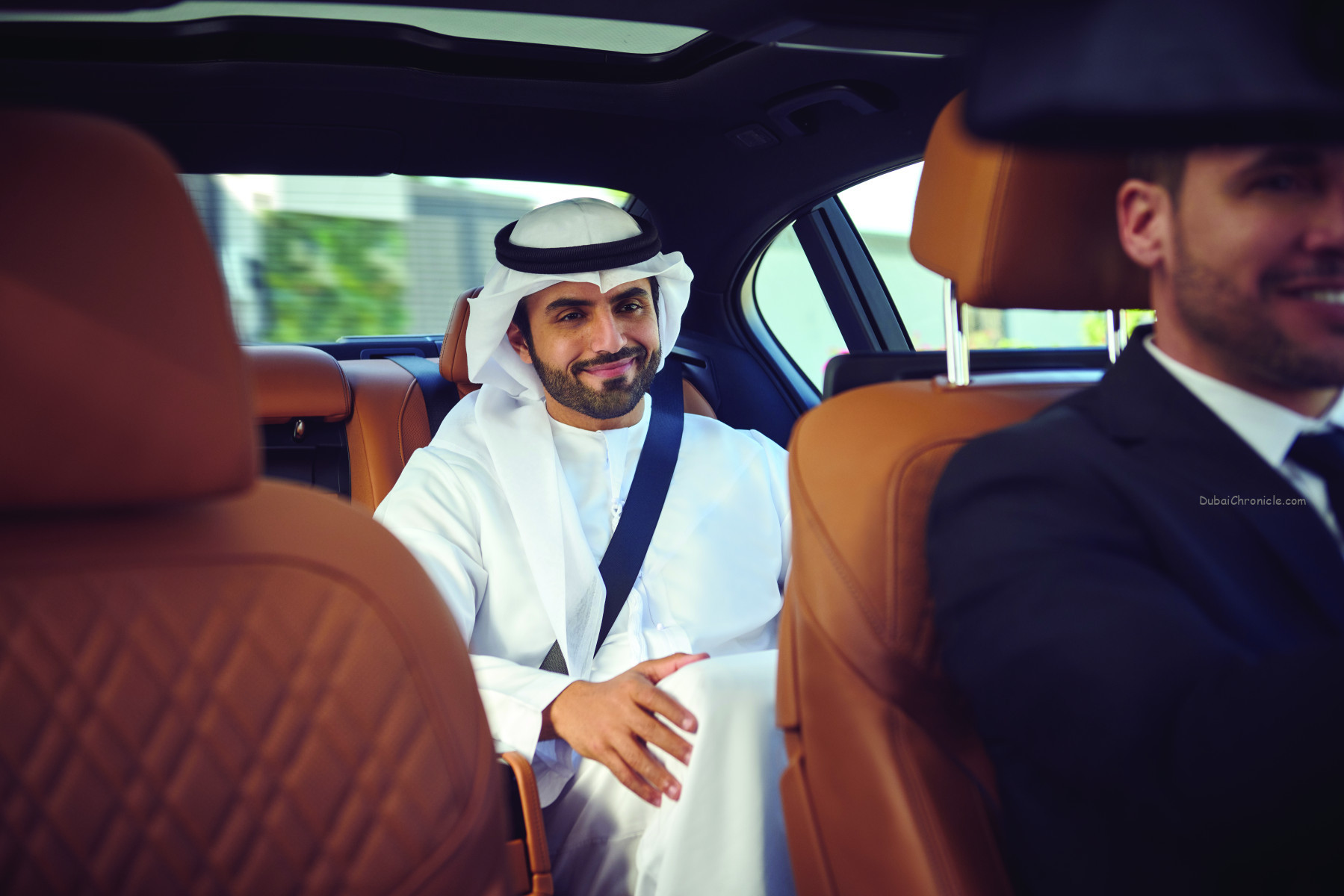 Emirates extended its complimentary Chauffeur Drive service to Tokyo Narita and Kansai International for First and Business Class passengers in 2025-26. The service was also introduced for Economy Class passengers in Clark. Chauffeur Drive is available at select cities across the Emirates network and covers both departure and arrival transfers.
For passengers connecting through Dubai, the end-to-end logic is now in place: a dedicated lounge at check-in, ground transfer covered on both ends, and seat-level connectivity in the air.
The Cabin Retrofit Programme
Emirates is midway through a US$ 5 billion cabin retrofit programme covering 215 aircraft. By 31 March 2026, 91 aircraft had completed a full cabin refresh. The refreshed cabins include Emirates’ latest inflight products and Premium Economy seating, which launched as a new class and has driven consistent demand since its introduction.
The retrofit matters for Dubai transit passengers because it affects the probability that the aircraft you board reflects the current product standard rather than a previous generation. That probability is increasing with each quarter.

marhaba and Ground Services
dnata, the Emirates Group’s ground and services division, operates marhaba meet-and-greet services across key airports globally. In 2025-26, marhaba launched in Manchester, extending a network that has long been available to passengers transiting Dubai International Airport. The service assigns a dedicated greeter who manages connections, transfers, and immigration facilitation.
dnata handled 888,793 aircraft turns globally in 2025-26, a 12% increase year on year. Its airport operations revenue reached AED 11.2 billion. The scale matters because it reflects the ground infrastructure that supports the Emirates transit product.
How Dubai Compares to the Global Lounge Rankings
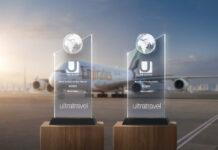
The Priority Pass Excellence Awards 2026, drawn from over 700,000 member ratings, named the Escape Lounge at Portland International Airport as Global Lounge of the Year. Regional winners included Lounge Fukuoka in Japan, the Vienna Lounge in Austria, Club Kingston in Jamaica, and Bidvest Premier Lounge in Johannesburg. No Dubai lounge placed in the 2026 rankings.
The Priority Pass network covers independent lounges accessible by card membership. Emirates’ proprietary lounges at Terminal 3 operate outside that network and are rated separately by airline quality benchmarks. The comparison is not direct, but the gap in the independent rankings is worth noting for travellers whose lounge access depends on a credit card rather than a ticket class.

What This Means for Your Next Booking
Emirates carried 53.2 million passengers in 2025-26 across 152 cities in 80 countries. It holds cash assets of AED 54.9 billion and an order book of 367 aircraft with deliveries running through 2038. The infrastructure investment is not pausing.
For travellers choosing a hub in 2026, Dubai’s ground-to-air product is more coherent than it has been at any previous point. The lounge, the transfer, the seat, and the connectivity now form a single intentional system. That is what most hubs still promise and Dubai is currently delivering.