Something fundamental is shifting in the global economy. Not gradually. Not quietly. But in a way that’s forcing governments, businesses, and investors to rethink everything they thought they knew about growth.
For decades, the formula was clear. Expand markets. Lower costs. Scale production. Repeat.
That formula is breaking down.
A new report from the World Economic Forum signals a turning point. Growth is no longer driven by the same engines. Instead, it’s being rewritten in real time by technology, geopolitics, and a growing list of global pressures.
Growth Has Entered Its Most Complex Era Yet
This is not just another economic cycle. It’s a structural reset.
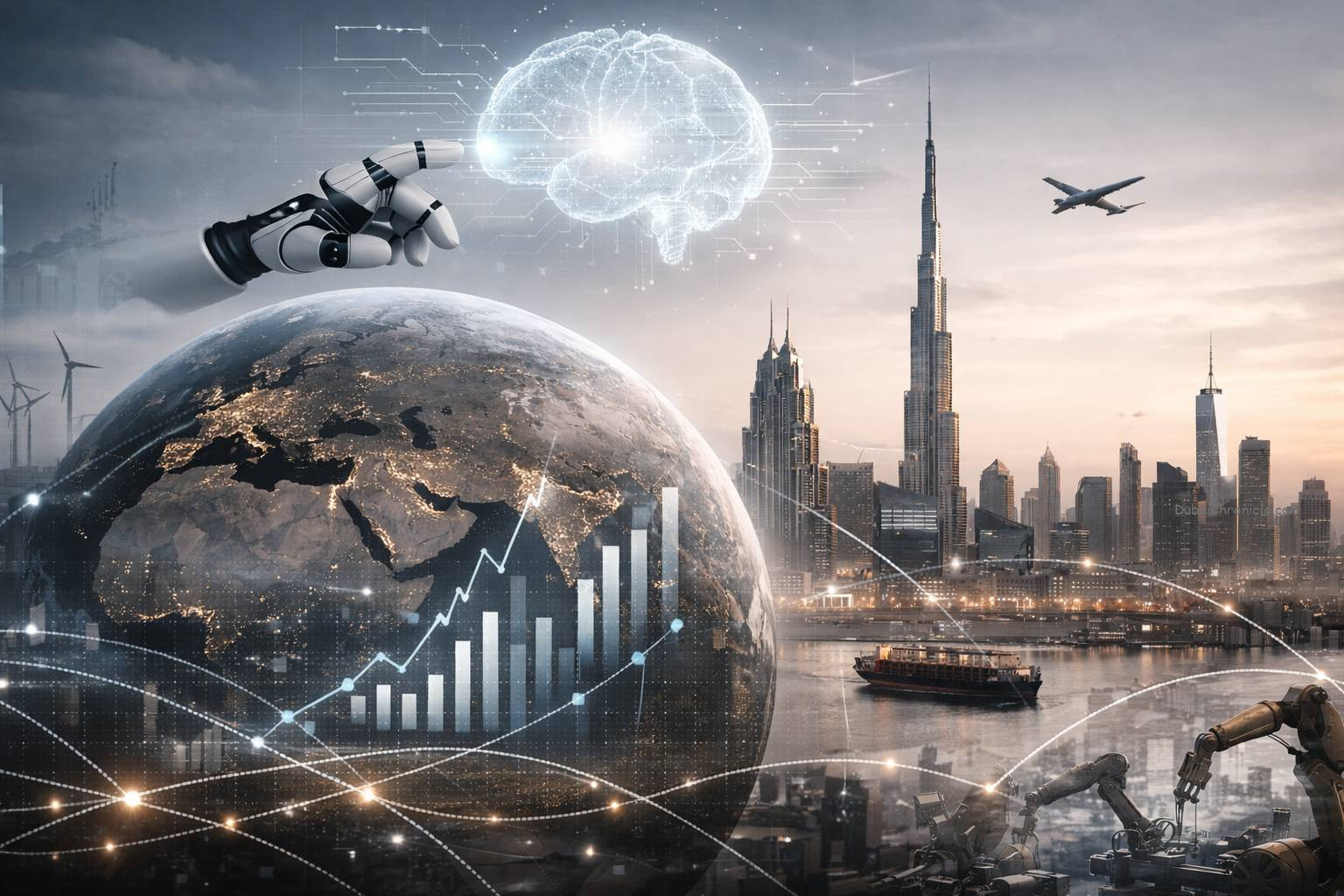
Artificial intelligence is accelerating faster than regulation can keep up. Debt levels, both public and private, are stretching limits. Supply chains are being redrawn along geopolitical lines. Climate pressures are no longer future risks. They are current costs.
And yet, amid all this uncertainty, opportunity is expanding.
The difference now is that growth is no longer automatic. It must be engineered.
The New Rules Are Being Written Now
The report outlines a set of “no-regret” strategies. In simple terms, these are moves that make sense no matter how the future unfolds. But even these come with trade-offs.
Technology is no longer optional. But access is uneven.
AI and digital infrastructure are becoming the backbone of economic value. The real question is no longer who innovates, but who benefits. Countries that fail to build talent pipelines risk being locked out of the next wave of growth.
Globalisation isn’t ending. It’s evolving.
The world is not de-globalising. It’s reorganising. Nations are hedging. They’re strengthening domestic industries while staying connected to global markets. It’s a careful balancing act between resilience and openness.
Governments are stepping back in — but with constraints.
Strong institutions, reliable infrastructure, and stable policy environments are back in focus. But here’s the tension: governments must invest in growth while managing record levels of debt. That trade-off is becoming harder to ignore.
Sustainability is shifting from cost to strategy.
Green transition is no longer just about compliance or reputation. It’s becoming a driver of competitiveness. The economies that treat sustainability as an investment rather than an expense are positioning themselves for long-term gains.
Where the Next Wave of Growth Is Building
The geography of opportunity is changing.
Middle-income economies are quietly becoming the backbone of global expansion, expected to drive nearly two-thirds of growth by 2030. Asia alone is set to deliver more than half of that momentum.
But it’s not just about where growth happens. It’s about how.
The sectors gaining traction tell a clear story:
- Digital services and AI-driven industries
- Advanced manufacturing powered by automation
- Healthcare and longevity-focused services
- Travel, leisure, and experience-based economies
This is a shift toward value, not just volume.
What’s Holding Growth Back
Even with strong demand and innovation, growth isn’t accelerating as expected. Two key pressures are standing in the way:
Energy costs remain stubbornly high.
Policy environments in many regions remain unpredictable.
These are not minor obstacles. They directly impact investment decisions, long-term planning, and overall confidence.
Then there are deeper structural challenges.
Advanced economies are struggling to find skilled talent. Developing markets are still dealing with limited access to finance and infrastructure gaps. Each group faces a different version of the same problem: constraints on potential.
A More Uneven, More Competitive Future
The next phase of global growth will not be evenly distributed.
Some regions are entering a demographic slowdown. Others are benefiting from younger, faster-growing populations. Supply chains are shifting. Trade routes are being recalibrated. Entire industries are relocating.
This creates divergence.
Some economies will accelerate. Others will stall. And the gap between them may widen.
The Real Takeaway
Growth is no longer a given. It’s a choice.
It depends on how quickly countries invest in people. How effectively they adopt technology. How well they manage risk while still pursuing opportunity.
The old model rewarded scale.
The new model rewards strategy.
Those who move early will define the next decade. Those who hesitate will spend it catching up.
And in this new economy, catching up is no longer easy.